Friday, September 24, 2010

Anne Boleyn, Thomas Wolsey, and Catherine of Aragon Biographies


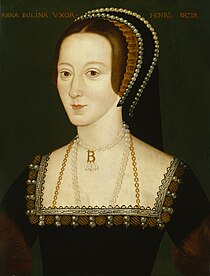
Anne Boleyn


Anne Boleyn was Queen of England from 1533-1536.  She was the second wife of King Henry VIII.  She was a key figure in the English Reformation.  Anne started out as the maid of honor for Catherine of Aragon, Henry VIII's first wife.  Henry began to pursue Ann in 1525, and he wanted to annul his wife Catherine so that he could marry Anne.  The Vatican would not allow Henry to annul his marriage to Catherine which began the breaking down of the power of the Catholic Church in England.  Anne gave Henry documents from the early Church that said that the king had royal supremacy.  This is what started the English Reformation because Henry decided that he would split away from the Catholic Church.  Henry then divorced Catherine and married Anne.
Primary Sources:
http://englishhistory.net/tudor/monarchs/boleyn.html#Biography
http://englishhistory.net/tudor/ab-percy.html
Image:
http://en.wikipedia.org/wiki/Ann_Boleyn

Thomas Wolsey
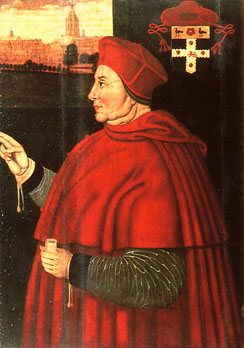
Thomas Wolsey


Thomas Wolsey was a cardinal of the Roman Catholic Church and a political figure in England during the late 1400's and early 1500's.  Wolsey became Henry VII's almoner. An almoner is a church officer who was in charge of distributing alms to the poor.  His power continued to grow and by 1514 he was in charge of almost all the matters of the state. He was extremely powerful within the Church.  His highest political position was as Lord Chancellor, the King's chief advisor.  In the Church he became Archbishop of York and he was made a cardinal in 1515.  
Wolsey was close with the King until he could not get the Vatican to allow Henry to divorce Katherine.  In a letter from Anne Boleyn to Wolsey, Anne says, "I cannot comprehend, and the king still less, how your reverent lordship, after having allured us by so many fine promises about divorce, can have repented of your purpose, and how you could have done what you have, in order to hinder the consummation of it."  From that point on Wolsey was not on good terms with the King.  In 1529, Wolsey's government position and property were taken from him.  At Cawood, he was accused of treason and ordered to go to London.  On the way there he fell ill and died on Novemeber 29, 1530. 

Sources:
http://en.wikipedia.org/wiki/Thomas_Wolsey
http://englishhistory.net/tudor/letter8.html

Image from:


Catherine of Aragon

Catherine of Aragon was born in 1485 in Spain.  She later moved to England and married Arthur, Prince of Wales.  After he died of sickness, Catherine then married his brother, Henry VIII, who would become King of England, with Catherine as his queen.  From the years 1509 - 1533, she ruled the land beside Henry.  Through the years, Catherine became pregnant a total of six times, but only one girl, Mary, survived past infancy.  When Catherine became to old to bear any more children, Henry divorced her for Anne Boleyn, a much younger woman with whom he was smitten, in 1533 (http://www.fordham.edu/halsall/source/cramner-hen8.html).  Three years later, Catherine of Aragon died on January 7 in Kimbolton Castle, after writing a letter to the ex-husband whom she still loved (http://englishhistory.net/tudor/letter5.html).
"Catherine of Aragon." Wikipedia, the Free Encyclopedia. Web. 24 Sept. 2010. <http://en.wikipedia.org/wiki/Catherine_of_Aragon>.

Wednesday, September 22, 2010

Part II: Richard III: Fact and Fiction

Why did Shakespeare portray Richard III the way he did?

Richard III was portrayed as a deformed hunchback by Shakespeare because he wanted to enhance the horrible things that Richard III did to all of the people around him.  Richard III wanted to ensure that he would become King when his brother King Edward IV died.  In order to do this he killed all of the possible heirs to the throne including Edward IV's sons: Edward V and Richard duke of York.  Shakespeare wanted to make Richard III seem as horrible as he possibly could for the things that he did.  Shakespeare was inspired by the Lancastrians, particularly Sir Thomas More.  Because Richard III was Yorkist, the portrayal of him by Sir Thomas More and Shakespeare were not entirely accurate.  They were biased towards Richard III because he was from the house of York and More was from the house of Lancaster.  Richard III did some very terrible things to his family members in order to gain the power of the throne, but Richard III was not actually deformed with a hunchback.  The way they portrayed Richard III was not fair to him and it really impacted the way he is depicted even today.

With regard to the history of Richard III, what is meant in distinction between "Traditionalist" or "Revisionist" source?  What is meant between "Lancastrian" and "Ricardian"?


According to http://en.wikipedia.org/wiki/Traditionalism, something that is traditionalist tends to stick more with traditions and the traditional beliefs on a subject.  Therefore, a traditionalist source would refer to things that people have believed about a subject throughout history whether they are true beliefs or not.  According to http://en.wikipedia.org/wiki/Historical_revisionism#Revisionism_vs._denial, something that is revisionist deviates from the traditional beliefs on something and usually disagrees with the way a historical event is portrayed in the traditionalist view.  Therefore, a revisionist source would be based more on solid fact rather than what people believe or have decided is true about something.  According to http://en.wikipedia.org/wiki/Ricardian_(Richard_III), Ricardian is used to describe a person who wants to change the portrayal and perception of Richard III's reputation.  According to http://en.wikipedia.org/wiki/Lancastrians, Lancastrian is used to describe a member of the Lancastrian house during the War of the Roses.  They were the opposing house of Richard III.

This goes along with the history of Richard III because there are two different sides to the way that he is portrayed throughout history.  The Lancastrians and Shakespeare had a more traditionalist view of Richard III because they portrayed him as being deformed and withered when he really was not.  This has affected the way that people see him today, and this visual of him has really been passed down and believed by people throughout history.  There are many different societies formed that are trying to erase the image of Richard III being deformed; they would be considered revisionist.  They are deviating from what people traditionally think of Richard III and making a new image for him.  Ricardians would be considered to have a revisionist view of Richard III.

"Lancastrian" or "Ricardian"


The first document is Lancastrian because it puts tons of emphasis on the terrible things that Richard III did and the people that he killed.  "But in the mean time perceaving that William lord Hastings was most vehement and earnest to have prince Edward once crowned king...whether yt wer that he fearyd his powr, or despearyd yt possible to draw him to his syde and opynyon, he determynyd to ryd the man owt of the way before his purpose showld be discoveryd to the resydew, whom he did not yeat fully trust."  This talks about how Richard III killed William lord Hastings because he believed that Hastings wanted Edward to take the throne that Richard III so desired.  He believed that Hastings had a lot of impact on the people and a lot of power.  Richard III did not think it would be possible to bring Hastings over to his side so he killed him to keep him out of the way of the throne.  "Richerd, whose mynde partly was enflamyd with desire of usurping the kyngdom, partly was trubblyd by guyltynes of intent to commyt so haynous wickednes (for a guiltie conscience causeth thoffendor to have dew punishment alway in imagination before his eyes)."  This quote focuses entirely on the Richard III's thoughts and the intent of his actions.  The person writing this did not know what Richard III was thinking, therefore, does not have the right to say such things.  The writer is focusing on bringing down the reputation of Richard III rather than building it up.


The second document is Ricardian because it talks about how misrepresented Richard III's reputation was.  It also talks about how Richard III was not actually deformed; that was just a rumor to make Richard III look even worse.  Horace Walpole says, "The old countess of Desmond, who had danced with Richard, declared he was the handsomest man in the room except his brother Edward, and was very well made."  There were people during Richard's time period who stated that Richard III was a handsome man.  The idea that he was deformed did not come until later.  The writer talks about a Lancastrian painter who painted a portrait of Richard III and did not include anything about ugliness or deformity.  If a Lancastrian person could paint a portrait of Yorkist Richard III without including deformities, then that should be proof that Richard was not deformed.  "Richard, who was slender and not tall, had one shoulder a little higher than the other: a defect, by the magnifying glasses of party, by distance of time, and by the amplification of tradition, easily swelled to shocking deformity; for falsehood itself generally pays so much respect to truth as to make it the basis of its superstructure."  The writer explains that Richard III did have one shoulder that was slightly higher than the other, but over time this small imperfection became magnified by people of the Lancastrian house and Richard III was portrayed throughout history as being deformed.


Sources:
http://en.wikipedia.org/wiki/Traditionalism
http://en.wikipedia.org/wiki/Historical_revisionism#Revisionism_vs._denial
http://en.wikipedia.org/wiki/Ricardian_(Richard_III)
http://en.wikipedia.org/wiki/Lancastrians

Tuesday, September 21, 2010

Part 1: Historical Background on the War of the Roses

The Rulers


King Henry V was born in September of 1387 and died August 21, 1422.  He ruled from 1413-1422.  He was the son of King Henry IV and Mary de Bohun, he was married to Catherine de Valois, and his son was King Henry VI.  He was a member of the House of Lancaster, and he spent much of his reign trying to regain land that was claimed by his ancestors in France.  He fought in the Battle of Agincourt during the Hundred Years War, which left him in control of Northern France.  He died at the age of 35 leaving his infant son, Henry VI, the throne.


King Henry VI was born in 1421 and died May 21, 1471.  He ruled from 1422-1461.  He was the son of King Henry V and Catherine de Valois, he was married to Margaret of Anjou, and and his son was Edward, Prince of Wales.  He became king when he was just an infant.  In 1453, he suffered from a mental illness and Richard, duke of York took up the throne.  Then, Henry recovered and wanted his throne back causing the War of the Roses.  He lost the throne in 1461 to Richard's son, Edward IV.


King Edward IV was born February 11, 1442 and died April 9, 1483.  He ruled from 1461-1470.  He was the son of Richard duke of York and Cicely Neville, he was married to Elizabeth Woodville, and he had ten children; his sons were Edward V, Richard duke of York, and George duke of Bedford.  When he was unable to defeat a Lancastrian army, he fled to Holland in 1470.


King Henry VI was born in 1421 and died May 21, 1471.  He ruled from 1470-1471.  He was the son of King Henry V and Catherine de Valois, he was married to Margaret of Anjou, and and his son was Edward, Prince of Wales.  He became ruler again for a brief moment of time from 1470-1471, but then he was captured by Edward IV and put in the tower of London where he was murdered.


King Edward IV was born February 11, 1442 and died April 9, 1483.  He ruled from 1471-1483.  He was the son of Richard duke of York and Cicely Neville, he was married to Elizabeth Woodville, and he had ten children; his sons were Edward V, Richard duke of York, and George duke of Bedford.  When he was unable to defeat a Lancastrian army, he fled to Holland in 1470.  He returned from Holland in 1471 and defeated the Lancastrian forces at the battle of Tewkesbury as well as having Henry VI executed.  His sons, Edward V and Richard were murdered in the tower of London the same year of his death.


King Edward V was born in 1470 and died in 1483.  He ruled in 1483.  He was the son of Edward IV and Elizabeth Wydville; he was not married and had no children because he was so young when he died.  Edward V's uncle and protector, Richard duke of Glouchester, captured him and cancelled his coronation.  Edward V was put in the tower of London where his brother Richard later joined him.  Edward V was declared an illegitimate king by Parliament because they said his father's marriage to his mother was illegal.  He was killed in the tower of London along with Richard.


King Richard III was born October 2, 1452 and died August 22, 1485.  He ruled from 1483-1485.  He was the son of Richard duke of York and Cecily Neville.  He was married to Anne Beauchamp Neville and his son was Edward Prince of Wales.  Richard III was the younger brother of Edward IV.  He was made the duke of Glouchester when he was nine years old.  He took control of Edward IV's heirs, Edward V and Richard, after he died.  The brothers were killed in 1483 in the tower of London and Richard III was killed by Henry VII at the battle of Bosworth Field in 1485.


King Henry VII was born January 28, 1457 and died April 21, 1509.  He ruled from 1485-1509.  He was the son of Edmund Tudor Earl of Richmond and Margaret Beaufort, he was married to Elizabeth of York, and his son was Henry VIII.  He was the first ruler from the Tudor line and he became head of the House of Lancaster through his mother's ancestry.  He defeated the Yorkists at the battle of Bosworth.  He married Elizabeth of York to try to unite the rival houses.  He defeated more Yorkists at Stoke and Blackheath.  He later died at the age of 52.

Monday, September 20, 2010

The War of the Roses Notes

  • Richard III becomes king and there is much deceit and manipulation of political events
  • An attempt on the part of Henry Tudor to taker over the kingship
  • Richard II steps down and he is replaced by Henry IV
  • Henry V dies and his son, Henry VI becomes king
    • He was a weak king because he was only a child
    • Because he is so young, people around him develop to vie for the throne
    • Unleashes a war between the house of Lancaster and the house of York
  • Peasants and lower class start to dislike the monarchs
  • The rise of the Tudor family
    • Gives us the England that we recognize in the Renaissance
    • An early modern Europe
    • Rise of strong monarchs
  • Catholic England
    • What happened to Catholic England?
  • England
    • From Henry VIII on is a fundamentally Anglican and Protestant country
    • Generations of warfare, burning, and conflict between Protestantism and Catholicism
  • Reformation
    • People were burned if found reading a New Testament
    • Catholic England turned into a Protestant nation
  • Henry VIII became king at 17 when his father died
    • Arthur is his brother but he dies so Henry becomes the heir apparent to the throne
    • He becomes king when his father dies in 1509
    • Starts the Reformation by divorcing his wife
    • His first wife Catherine of Aragon was going to marry his older brother, but Henry marries her because his brother died
    • This creates an alliance between England and Spain
  • The Plantagenet line is replaced by the Tudor line
    • When Henry V died young his wife remarried Owen Tudor which opened up the Tudor bloodline into the throne
    • Henry VII Tudor defeats Richard III of York and takes the throne into the Tudor bloodline
    • The Tudors would rule England for the next 200 years
  • Lancaster and York are the two Plantagenet houses that compete during the War of the Roses

Sunday, September 19, 2010

Direct Effects of the Black Death on European Society

Peasant rebellions against the knights, blame for the Plague being placed on the Jewish people, and laborers wanting higher wages are direct effects of the Black Death on European Society.

The loss of laborers during the Plague resulted in the laborers wanting higher wages, which caused the king to create the "Ordinance of Laborers" in order to keep wages at the level they were before the Plague.  During the Plague, so many of the people that died were laborers and servants.  Because of the scarcity of servants, people would not work unless they were promised higher wages.  In the "Ordinance of Laborers" the king states that a servant or laborer will perform the job that they are required to do for the salary that is meant for that job.  If a servant or laborer refuses to perform the job that they are required to do, they will be sent to the nearest prison until they agree to do their job appropriately.


During the time period after the Black Death, there were outbreaks of peasant rebellions against the knights who were in control of them.  This was due to political and social insecurities that resulted from the disease itself.  The peasants would gather together by the hundreds and attack the knights who held contol over them.  They would got to their homes, tie up the knight, and violate his wife and daughter right in front of him.  They would then kill the wife and children along with the knight.  They at times would kill the knight and roast him in the fire, and then force the wife to eat her husband.  They would then kill her along with her children.

People did not understand how the Plague had come about and spread so quickly so they decided to blame it on the Jews because they are a good scapegoat for the things that people did not understand.  Many people believed that the Plague was a conspiracy by the Jews to poison all those who were Christians.  Jews were capture and tortured, causing them to confess to doing things that they never actually did.  Rumors of their confessions spread and Jews from hundreds of different cities were being killed and their homes burnt.  Some people believed that in killing the Jews, they would be saved from the pestilence itself, but others killed the Jews because they were economic competitors and they were in debt to them.

Friday, September 17, 2010

The Boy King Notes

  1. Richard II was king only by name but his uncle John had actual power
    • This is because he was too young
    • He was only ten
  2. Peasants were going to create an army in order to gain higher wages for their labor
  3. There was a massive rebellion
  4. June 12, 1381 an army of 10,000 gathered on a hill that overlooked the city
  5. They set palaces on fire and decapitated people on the spot
  6. June 13, 1381, Richard saw London crumbling with flame
    • He met with the rebels and negotiated with them
    • The rebels wished for a new Magna Carta
  7. Richard said to the rebels, "You shall have no captain but me."
  8. Richard was very different from the other kings of England
  9. They asked Richard to resign from the throne and he eventually gave in

Thursday, September 16, 2010

The Hundred Years War Notes

  1. 1337-1453
  2. King John signed away English land to Norman France in 1204
  3. They decided to keep only one part of the land- Gascony
  4. England couldn't respond to what was happening there because they were fighting the Scots
  5. France allied itself with the Scots to destabilize England because they both hate England
  6. Edward I is hammering down the Scots and then decides to challenge Philip VI of France
  7. Edward III decided to declare himself the King of France
  8. Edward III sees that many of the French princes are dissatisfied with the monarchy at home so he lures them into his alliance
  9. There were raids throughout England and France at this time
  10. Edward III was victorious at the City of Crécy, and then later Calais
  11. Edward IV becomes known as the Black Prince and is fighting in Bordeaux
  12. There is a treaty for the Hundred Years War- Brétigny
    • It said the French should pay the British and for that Wedward will sept down from his throne
  13. France's new king is Charles V, and his constable is Bertrand du Guesclin.
    • He died in 1380
  14. Richard II is the new king
    • Wanted peace for France
    • Ends up losing the kingship
  15. In 1413, Henry V takes the British back into France for the purpose of finalizing the war
    • Meets the French at Agincourt- October 25, 1415- Saint Crispin's Day
    • The English army is outnumbered by the French
    • They defeat the French
    • Doesn't completely end the Hundred Years War but raises English morale
    • The great turning point of the war
  16. Henry VI dies and his uncle the Duke of Bedford takes up the leadership of the English in France
    • The plane is to go into the Loire valley and battle
  17. There was an alliance between the French and the Scots
  18. John Duke of Bedford defeated the horses at the Battle of Verneuil in August 1424
  19. The English troops besieged the town of Orleans in 1428
    • It looked like they were going to be able to starve out the French army in the city
    • They surrounded the town and burned down the crops
  20. Joan of Arc had voices in her head that told her to lead troops against the English
    • The French took on the English in the Loire valley
    • She was captured by the English
  21. The end of the war
    • The French take the Loire valley back
    • There was a truce in 1444 - Tours
      • The English king Henry VI and the French Princess Margaret would get married, but this does not work out
    • Charles VII broke the truce and attacked the remaining British in Normandy
      • He defeated the British and returned to Gascony
      • Beat the British at Gascony
    • There is a final battle between John Talbot and Charles VII
      • July 17, 1453
      • John Talbot's army is killed along with himself
  22. Result of the Hundred Years War
    • There remained aspirations in the British to reclaim land
    • Nationalism developed
    • Englishmen became Englishmen and Frenchmen became Frenchmen
    • You were defined by your king and queen and your country
    • This is the beginning of modern Europe